Exterior foundation waterproofing is the most permanent solution for wet basements on Long Island. Unlike interior drainage systems that manage water after it enters, an exterior waterproofing membrane stops water at the foundation wall surface — before it can reach the interior. This guide covers when exterior waterproofing makes sense for Long Island homes, what it costs, how the process works, and which membrane systems we recommend for different soil and foundation conditions.
Why Long Island Foundations Need Exterior Waterproofing
Long Island sits on glacial till deposited during the last ice age — a mix of sand, gravel, clay lenses, and silt that varies significantly by location. In many areas, particularly along the North Shore and in low-lying communities near rivers and bays, the water table sits just 2 to 8 feet below grade. This shallow groundwater creates constant hydrostatic pressure against foundation walls.
Most Long Island homes built between the 1940s and 1980s received only damp-proofing during construction — a thin asphalt emulsion spray applied to the exterior foundation wall before backfill. Damp-proofing is designed to resist soil moisture vapor, not liquid water under pressure. After 40 to 60 years in Long Island's aggressive soil environment, this original coating cracks, delaminates, and loses all protective value. The result is a bare foundation wall exposed to hydrostatic groundwater with no barrier between the water and the interior.
Exterior foundation waterproofing replaces this failed barrier with a modern membrane system rated for continuous hydrostatic pressure — creating a permanent seal that prevents water from ever contacting the foundation wall surface.
When Exterior Waterproofing Is the Right Choice
Not every wet basement needs exterior waterproofing. For homes with moderate seepage through cove joints or minor block wall weeping, an interior drainage system with a properly sized sump pump is effective and significantly less expensive. Exterior waterproofing is the right solution when:
- High water table: When groundwater sits within 2 to 6 feet of grade, hydrostatic pressure is constant — not just during storms. Interior systems manage this pressure but cannot eliminate it. Communities like Nissequogue, Kings Park, and parts of Smithtown near the Nissequogue River fit this profile.
- FEMA flood zone location: Homes in or near AE flood zones face elevated groundwater risk that warrants stopping water at the source. Parts of Nissequogue, coastal Bay Shore, and areas along tidal rivers carry AE designations.
- Water entering above the footing: When water infiltrates through the wall itself (not just the cove joint at the base), it indicates the wall is under direct hydrostatic load. Exterior membrane addresses this directly.
- Block foundation with failed mortar: Concrete block foundations with deteriorating mortar joints allow water through at every joint line. An exterior membrane seals the entire wall surface regardless of joint condition.
- Valuable mechanical systems in basement: Homes with pool equipment, HVAC, generators, or other critical systems below grade benefit from the absolute protection of exterior waterproofing.
Exterior Waterproofing Membrane Types for Long Island
We install three primary exterior waterproofing membrane systems on Long Island. The right choice depends on foundation type, condition, soil composition, and budget. Each system is rated for continuous below-grade hydrostatic pressure — a critical distinction from the original damp-proofing that came with most Long Island homes.
Spray-Applied Asphalt-Modified Polyurethane
A liquid-applied membrane that cures into a seamless rubber coating bonded directly to the concrete surface. Best for poured-concrete foundations in good condition. Eliminates seam risk entirely and provides excellent adhesion. This is our fastest application method and the most common choice for newer Long Island homes (1980s onward) with poured-concrete walls.
Rubber EPDM Sheet Membrane
A continuous sheet-applied barrier with heat-welded seams. EPDM (ethylene propylene diene monomer) offers exceptional elongation capacity — critical for accommodating the seasonal foundation movement caused by Long Island's freeze-thaw cycles. Excellent for homes with longer foundation walls where seamless application is impractical.
Bentonite Clay Sheet Membrane
Sodium bentonite sheets that swell when contacted by groundwater, forming a self-sealing barrier. Particularly effective for older block foundations with irregular surfaces — the clay conforms to imperfections and self-heals minor punctures caused by backfill. Common choice for 1960s–1970s block foundations in Nissequogue and Kings Park estate homes.
The Exterior Waterproofing Process
Exterior foundation waterproofing is a multi-day project that requires excavation around the foundation perimeter. Here is the step-by-step process we follow on Long Island:
- Excavation to footing depth. We excavate to the full foundation footing — typically 6 to 8 feet deep for Long Island homes. Shallow excavation that stops short of the footing leaves the most vulnerable area (the wall-footing cold joint) unprotected. We use a mini-excavator for efficiency while protecting landscaping and structures.
- Foundation wall preparation. The exposed foundation wall is pressure-washed to remove soil, deteriorated damp-proofing, and debris. Cracks and voids are filled with hydraulic cement. The surface must be clean and sound for proper membrane adhesion.
- Membrane application. The selected membrane system is applied to the entire exposed wall surface from grade to footing. For spray-applied systems, this means multiple passes to achieve specified thickness. For sheet systems, panels are overlapped and sealed at joints.
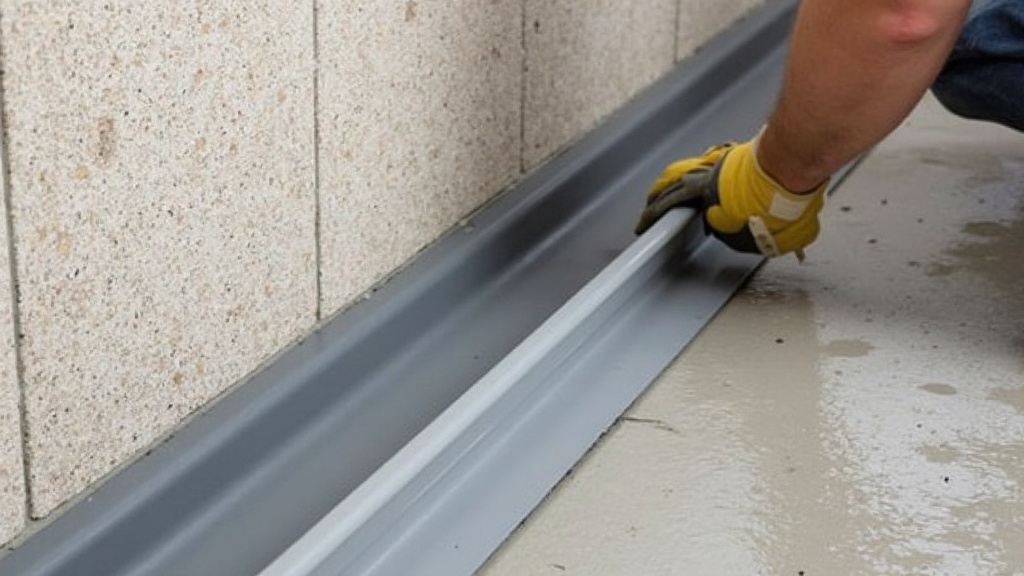
- Drainage board installation. A high-density polyethylene (HDPE) dimple drainage board is installed over the cured membrane. The drainage board protects the membrane from puncture during backfill and creates an air gap channel that directs water downward to the footing drain rather than allowing it to accumulate against the membrane surface.
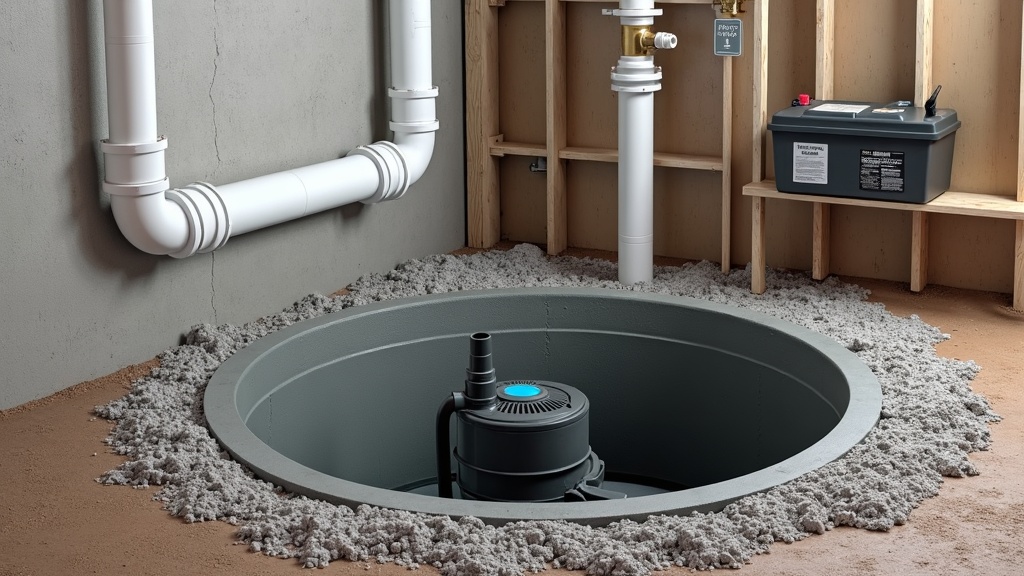
- French drain at footing level. A 4-inch perforated PVC pipe wrapped in filter fabric is bedded in washed gravel at the footing level. This collects all water traveling down the drainage board and routes it to either a daylight outlet (where grade permits) or an interior sump pump collection pit.
- Backfill and grade restoration. The excavation is backfilled in lifts with compaction to prevent future settling. Surface grade is restored to direct water away from the foundation. Landscaping and hardscaping are restored to match pre-excavation condition.
Need Exterior Waterproofing?
Our lead waterproofing tech our lead waterproofing tech will assess your foundation, soil conditions, and water table to determine whether exterior membrane or interior drainage is the right approach for your specific property. Free on-site assessment with no obligation.
Call (631) 625-8649Exterior Foundation Waterproofing Cost on Long Island
Exterior waterproofing costs more than interior drainage because it requires excavation, membrane materials, drainage board, and footing drain installation. However, it is a permanent solution that does not require ongoing maintenance or pump replacement. Here is what Long Island homeowners can expect:
Single wall (20–40 linear feet)
Common when water intrusion is limited to one side — typically the downhill or water-facing wall.
Two walls (40–80 linear feet)
Addresses the two most vulnerable walls, often the rear and one side of the foundation.
Full perimeter (100–180+ linear feet)
Complete protection for homes with severe hydrostatic pressure on all sides. Common in high water table areas like Nissequogue.
French drain tie-in to sump
Perforated footing drain routed to interior sump pit with submersible pump and check valve.
Battery backup sump pump
Essential for Long Island homes exposed to nor'easter power outages lasting 12–48 hours.
Long Island Areas Where We Recommend Exterior Waterproofing
Based on our experience across Nassau and Suffolk Counties, these areas have the soil conditions and water table levels that make exterior waterproofing the recommended approach:
- Nissequogue: Glacial till peninsula above the Nissequogue River estuary. Water table 2 to 6 feet below grade. FEMA AE flood zone. Estate homes from the 1960s–1980s with deteriorated original damp-proofing. The highest-need area on Long Island for exterior waterproofing membrane installation.
- Kings Park: North Shore hamlet near Sunken Meadow State Park. Elevated water table, 1960s–70s block foundations, glacial till soil with clay lenses.
- Smithtown (near Nissequogue River): Lower-elevation sections along Landing Ave and Edgewood Ave corridors experience significant groundwater pressure from the Nissequogue River water table.
- Hauppauge (low-lying sections): Lower-elevation areas near Veterans Memorial Highway with chronic hydrostatic pressure against block foundations.
- Coastal communities: Any Long Island home within or adjacent to FEMA flood zones with documented water table issues benefits from exterior waterproofing as the baseline protection strategy.
Exterior vs. Interior Waterproofing: Side-by-Side Comparison
| Factor | Exterior Membrane | Interior Drainage |
|---|---|---|
| How it works | Stops water at the wall surface | Captures water at the cove joint and routes to sump |
| Cost (Long Island) | $8,000–$45,000 | $4,000–$12,000 |
| Lifespan | 30–50+ years | 20–30 years (pump replacement every 7–10 years) |
| Disruption | Exterior excavation (landscaping impact) | Interior work (1–2 days, minimal disruption) |
| Best for | High water table, flood zones, severe pressure | Moderate seepage, cove joint water, standard conditions |
| Maintenance | None | Annual pump testing, battery replacement every 3–5 years |
Why Original Damp-Proofing Fails on Long Island
When we excavate Long Island foundations, we routinely find the original damp-proofing reduced to brittle flakes with bare concrete exposed beneath. This is the single biggest reason Long Island homes that stayed dry for decades suddenly develop water problems — the damp-proofing has simply reached end of life after 40 to 60 years.
Damp-proofing was never designed for the conditions it faces on Long Island. It was specified as a moisture vapor barrier, not a liquid water barrier. Long Island's clay-bearing glacial till holds saturated groundwater directly against the foundation for extended periods — conditions that overwhelm any coating not specifically rated for hydrostatic pressure. When the original damp-proofing cracks and delaminates, the foundation wall is essentially bare against the water table.
A true exterior waterproofing membrane — whether spray-applied polyurethane, sheet EPDM, or bentonite clay — is engineered for permanent, continuous hydrostatic exposure. These systems do not degrade in contact with saturated soil. Combined with a drainage board and perforated footing drain, they create a complete water management system that eliminates the source of intrusion rather than just managing the symptoms.
Frequently Asked Questions About Exterior Waterproofing
Below are the most common questions Long Island homeowners ask about exterior foundation waterproofing. For a free assessment of your specific situation, call us at (631) 625-8649.